
Putting a GM V8 into a BMW E9x 3-series or E8x 1-series gets you a stiff, well-balanced chassis with cheap, proven V8 power. We've been building this swap since 2016, every part starts in CAD and gets tested on our own cars before it ships, and there are hundreds of completed swaps on the road running this hardware.
Before you buy anything, watch one of these swaps happen. Our four-part swap series follows the whole job on a real E90, including the small details written guides tend to skip, and the LSE90 Garage channel has the rest: wiring walkthroughs, fitment development, and the cars we're building right now.
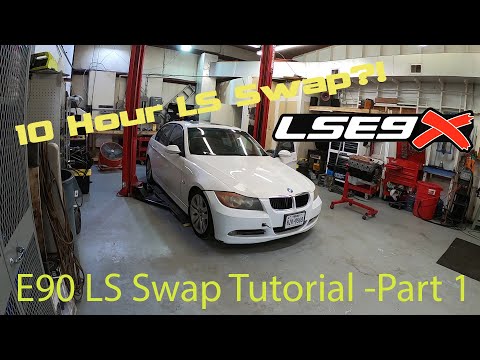
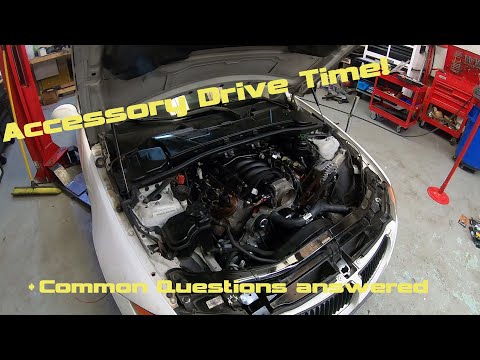
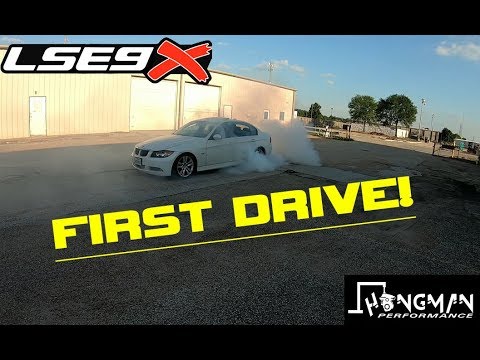
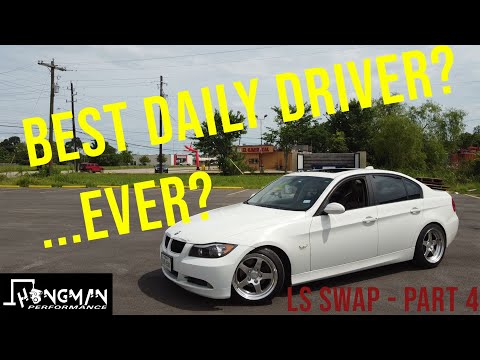
Once you've seen the job end to end, this page walks the same process start to finish, and the complete parts list covers every part, system by system, when you're ready to plan your build.
Jump to a section:
- Know Your Chassis
- Pick Your Engine
- Pick Your Transmission
- Mounts & Swap Kits
- Fuel, Cooling & AC
- Exhaust
- Wiring & ECU
- Electronics & CAN
- Driveline
- The Small Stuff
- Customer Builds
- Questions
Know your chassis
The swap covers the whole E9x and E8x family: E90 sedan, E91 wagon, E92 coupe, E93 convertible, E82 coupe, E88 convertible, and the early X1. The body styles guide goes through all eight body styles and what each one means for the swap. On the standard RWD cars the front subframe is shared across the range, so the same mounts and crossmembers bolt into any of them, and the M3 and xDrive cars are the two exceptions up front.
M3 cars run their own front subframe, so they take the M3 version of our mounts along with a standard rotation power steering pump. xDrive cars can either keep the xDrive subframe with the front differential and axles removed, or convert to a RWD front subframe, which frees up exhaust clearance and steers better for a few hundred dollars of junkyard parts. The tunnel stays xDrive shaped either way, so you'll run the xDrive transmission crossmember, and the finished car is rear-wheel drive in both cases; fitment photos are in the xDrive subframe post. N55 cars are a wiring note rather than a subframe one, since they keep their DME under the intake manifold instead of in the DME box, and the N55 notes cover what moves.
Pick your engine
Engine choice comes down to LS or LT, and either bolts to the same mounting points in this chassis. Every LS shares the same external dimensions, from a junkyard 5.3 truck engine to an LS7, with the front-wheel-drive LS4 being the only one to avoid, so your mounts and clearances don't change with the engine you pick. The main split is iron versus aluminum: iron block truck engines are heavier but cheap and take boost well, since a stock bottom end 5.3 or 6.0 will make 700 hp and more with a turbo, a cam, and supporting fuel system work, while the aluminum engines cost more and save real weight over the front axle. The Gen V LT is the other route, where complete LT1 dropouts come with most of what you need and the factory GM ECU can be reused with our E92 conversion box; the full comparison is in LS vs LT.
My suggestion is to buy the biggest engine you can afford, and don't be afraid to get a running engine in the car now and modify it later. Trying to do everything at once causes huge delays in a swap, and a car that drives can always take a cam or a turbo down the road.
Pick your transmission
Pick the transmission early, because the crossmember, driveshaft, and shifter all depend on that choice. The GM manuals and automatics are the most proven route, the 335i's own GS6-53BZ 6-speed works with a PMC adapter plate, and the ZF 8HP is the modern automatic option with MaxxECU control. The transmission section of the parts list breaks down all nine options with what each one needs, and for the 8HP our guide Why the ZF 8HP Is Perfect for Your E9x LS Swap covers that swap end to end.

Mounts and swap kits

Our swap kits bundle the engine mounts, transmission crossmember, and accessory drive brackets for your exact combination, and each piece is available separately if you're building up from parts. Crossmembers exist for the T56/TR6060, the GM automatics (4L60E, 4L80E, TH400), and the DCT/8HP, with xDrive versions for the T56/TR6060, 4L80E, and 8HP.
Fuel, cooling, and accessories
The stock fuel system is returnless at 72 psi and feeds about 400 hp as it sits. A single high capacity in-tank pump covers the 400 to 600 hp range, and past that you move to dual pumps. Pump control depends on your ECU, since MaxxECU can keep the factory EKP module while Holley replaces it with a relay, and the wiring diagram along with the pump options is on the fuel system page.
The stock radiator and PWM electric fan handle the cooling on most builds. On the engine side you'll pick an accessory drive spacing (Corvette, F-body, or truck) and decide how you want to handle AC, where the Sanden drive plus the CAN box keeps cold air working through the factory buttons. Both systems are covered in the parts list, and belt routing is in the accessory drive instructions.

Exhaust

Exhaust is one of the few parts of the swap without a full bolt-on path, since the manifolds or headers bolt to the engine but everything from there back gets built to the car. On RWD cars our LSe9x long tube headers were developed on this chassis with our mounts, and Gen 5 Camaro manifolds or the generic cast manifolds are the budget route; xDrive cars stick with the manifold options for clearance. From the collectors back, the usual plan is bringing the car to an exhaust shop and having the rest of the system built. Turbo builds are mostly custom fabrication, and Mayhem Fab builds turbo kits specifically for these swaps. The exhaust section of the parts list has every option with the fitment notes.
Wiring and engine management
Plan the wiring before you pull the stock engine, because the ECU choice drives the parts list. A standalone ECU runs the LS, our CAN conversion boxes tie it into the BMW's network (covered in the next section), and nearly all of the chassis wiring happens at the DME box in the engine bay. One thing that isn't optional: the BMW pedal is drive-by-wire, so plan on a drive-by-wire throttle body and an ECU that supports it.
We stock and run three platforms. The Holley Terminator X Max is the budget option with a huge tuner network, and it needs our CAN box and doesn't support cruise control. MaxxECU supports the E9x CAN natively, so it needs no conversion box, keeps cruise control working, and controls the 8HP. The Haltech Nexus Rebel LS is built specifically for LS swaps, supports cruise, and pairs with our Haltech CAN box. The ECU comparison lays out the tradeoffs between all three, wiring is documented connector by connector in the wiring guide, the interactive wiring tool filters that down to just your engine and ECU combination, and the Holley wiring walkthrough shows the whole job on video.

Electronics and CAN bus: what keeps working

The E9x runs nearly everything through BMW's CAN network, and the swap leaves the chassis side of that network alone, so the factory modules keep talking to each other like they always did. The CAN box, or MaxxECU's native CAN support, joins the new engine to that conversation.
The swap doesn't touch the windows, locks, radio and iDrive, heat and defrost, or the convertible top on E93 and E88 cars, so the interior stays close to 100 percent functional. The CAN box brings back the factory tach, the 335i oil temp gauge (repurposed to read coolant temp), wheel speeds fed to the ECU, the factory AC buttons requesting the compressor, starter function through the BMW ignition, and a clean dash with no brake or DSC lights on RWD cars. Cruise control depends on your ECU, since MaxxECU and Haltech support it directly and the CAN box converts the factory stalk into Holley LCD switch inputs.
Driveline
You can retain the stock differential, and our adapters mate it to the GM driveline. The 335i/135i cars carry the large case differential, which is the stronger of the two, while the 325i/328i medium case holds up fine at moderate power. Between the transmission and the differential runs a custom single-piece driveshaft, measured after the drivetrain is sitting at final height on torqued mounts.
From there you have two upgrade paths. Swapping in an M3 or M5 differential keeps the rear end BMW and adds a factory limited slip over the open unit your car likely came with. For big power and drag builds, our Ford 8.8 kit replaces the BMW differential entirely: the brackets bolt the 8.8 into the chassis, axle shafts from Drive Shaft Shop, GForce, or Seems Legit Garage work with the kit, and the 8.8 opens up a wide range of cheap gear ratios and limited slip options with the strength to back serious power. Whichever way you go, settle on the differential before the driveshaft gets built, because the rear flange changes with it and you'll be modifying the shaft down the road otherwise.

Start with driveshaft basics, and read the rear knuckle and hub guide before you touch the rear end, because the 325i/328i and 335i hubs are different sizes. If you're weighing rear gear ratios, the gear ratio calculator shows what any differential and tire combination does to cruise rpm and top speed for your transmission.
The small stuff
Every swap has a layer of small items that never make the highlight list but stop the job cold when they're missing: heat shielding for the tunnel and firewall, a mount for the ECU, firewall grommets for wiring and hoses, fluids, and the connectors and hardware that tie everything together. The miscellaneous section of the parts list covers that layer, and it's worth ordering it with the big parts so the car isn't sitting while you wait on hoses. Budget a little high for this category, because something always comes up.
Questions
The FAQ answers the questions we get every week, including cost, brakes, and what still works in the interior. For anything else, use the contact form or email Sales@lse90.com.
Real customer builds
These are customer cars on the road running this hardware, pulled from the customer swaps page, where every featured build lists what went into it.


Ready to start?
Watch the series, work through the parts list, then order the kit for your combination. When your car drives, submit your build and get featured with the rest.
Shop Swap Kits Read the Parts List


